

Guide d'achat de sondeurs : Garmin, Humminbird et Lowrance — Lequel vous convient le mieux ?
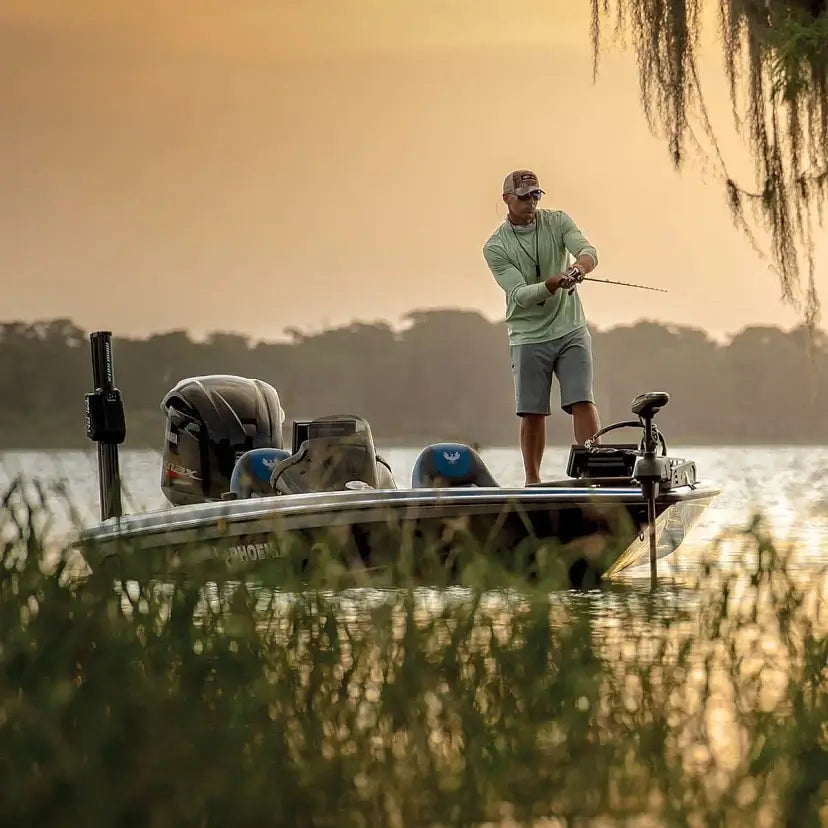
Si vous avez déjà fixé une page de produit de détecteur de poissons en vous sentant plus perdu qu'un bar en eau libre, sachez que vous n'êtes pas seul. Les spécifications techniques peuvent devenir vite accablantes : CHIRP, MEGA Imaging, SideScan, ClearVü, LakeVü... qu'est-ce que tout cela signifie ? Ce guide démystifie le tout et vous aide à choisir l'unité qui correspond réellement à votre façon de pêcher, que vous fassiez de la traîne en eau libre, que vous prospectiez des baies peu profondes ou que vous équipiez votre ponton Sea-Doo Switch pour une journée sur le lac.
Nous proposons des détecteurs de poissons des trois plus grandes marques d'électronique marine : Garmin, Humminbird et Lowrance. Chaque marque a sa propre approche du sonar et de la cartographie, et chacune possède des points forts selon votre style de pêche et votre budget. Allons-y.
Que rechercher dans un détecteur de poissons
Avant de commencer à comparer les modèles, il est utile de savoir ce que signifient réellement les spécifications.
La taille de l'écran compte plus que la plupart des gens ne le pensent. Un écran de 7 pouces est fonctionnel, mais une fois que vous passez à 9 ou 10 pouces, vous vous demanderez comment vous avez pu pêcher sans. La lisibilité en plein soleil, surtout en eau libre, est très importante. Toutes les unités que nous vendons utilisent des écrans à haute luminosité conçus pour une utilisation en extérieur, mais plus c'est grand, mieux c'est en général.
Le type de sonar est là où les choses deviennent intéressantes. Le sonar 2D traditionnel (CHIRP) vous montre les arches de poissons et la structure du fond sous le bateau. C'est votre base de référence. Le Side Imaging (ou SideScan) balaie de chaque côté et vous donne une image large de la structure, des herbiers et des tombants (incroyablement utile pour la prospection). Le Down Imaging projette un faisceau étroit et détaillé directement vers le bas et est excellent pour lire la structure située juste en dessous de vous. Le MEGA Imaging (Humminbird) et l'UHD (Garmin) sont des versions à haute fréquence de ces technologies qui produisent des images nettement plus nettes.
Le GPS et la cartographie vont de pair sur la plupart des unités modernes. Les cartes de lacs intégrées, la possibilité de marquer des points de cheminement (waypoints) et d'épingler des emplacements, ainsi que les capacités de traçage de cartes font une énorme différence lorsque vous explorez de nouvelles eaux. Les meilleures unités sont préchargées avec des cartes détaillées des lacs canadiens ou vous permettent de les ajouter.
La compatibilité de la sonde (transducteur) mérite d'être considérée dès le départ. La sonde est le capteur qui envoie et reçoit réellement les signaux sonars. Elle se monte sur votre coque ou votre tableau arrière (ou, dans certains cas, dans la coque). La sonde fournie avec votre unité détermine les modes de sonar dont vous bénéficierez, alors assurez-vous que l'ensemble correspond à ce que vous recherchez.
Série Garmin ECHOMAP — Fiable, polyvalente et facile à utiliser
La gamme ECHOMAP de Garmin est systématiquement l'un des choix les plus populaires auprès des pêcheurs canadiens, et il est facile de comprendre pourquoi. L'interface est intuitive, la cartographie est excellente et les performances du sonar sont de premier ordre. Garmin utilise sa technologie de sonar UHD (Ultra High-Definition) sur la plupart de ces unités, ce qui offre une imagerie SideVü et ClearVü nettement plus nette par rapport aux anciennes générations.
Si vous installez un détecteur de poissons sur un Sea-Doo FishPro ou que vous préparez une configuration de pêche dédiée, l'ECHOMAP UHD 62cv est un solide point de départ. Il s'agit d'une unité de 6 pouces avec ClearVü et sonar CHIRP traditionnel — assez compact pour les installations plus petites, assez performant pour une utilisation sérieuse. La version avec la sonde GT15M-IH est spécifiquement conçue pour un montage dans la coque, ce qui est idéal pour les motomarines.
[PRODUCTS]
garmin-echomap-uhd-62cv-gps-with-gt15m-ih-transducer
[ENDPRODUCTS]
Si vous souhaitez le GPS et l'écran sans la sonde (parce que vous remplacez par un autre capteur ou que vous en possédez déjà un), l'unité autonome ECHOMAP UHD 62cv est disponible séparément.
[PRODUCTS]
sea-doo-garmin-echomap™-uhd-62cv-gps
[ENDPRODUCTS]
Passez à l'ECHOMAP UHD 72sv et vous obtiendrez un écran de 7 pouces, le sonar à balayage SideVü et la sonde GT54UHD-TM de Garmin. C'est l'un de nos meilleurs vendeurs, et pour cause — c'est le juste milieu entre prix et performance pour la plupart des pêcheurs. Il comprend des cartes LakeVü g3 préchargées couvrant les lacs canadiens et américains avec beaucoup de détails.
[PRODUCTS]
sea-doo-garmin-echomap™-uhd-72sv-gps-295101264-best-seller
[ENDPRODUCTS]
Le UHD2 72sv est la version mise à jour du 72sv, optimisée pour le ponton Sea-Doo Switch. Si vous utilisez un Switch et voulez une unité qui s'intègre parfaitement à l'installation, c'est celle qu'il vous faut.
[PRODUCTS]
sea-doo-garmin-echomap-uhd2-72sv-gps-295101242
[ENDPRODUCTS]
Pour les pêcheurs qui veulent un écran plus grand et des performances globales puissantes, l'ECHOMAP UHD 9sv est une unité de 9 pouces avec SideVü, ClearVü et sonar traditionnel complet. Il est disponible en deux versions — une avec les cartes LakeVü g3 préchargées pour les lacs canadiens et américains, et une avec une carte de base mondiale si vous pêchez dans plusieurs régions.
[PRODUCTS]
garmin-chartplotter-echomap-uhd-9sv-fish-finder-lakevu-g3-0100252301
garmin-chartplotter-echomap-uhd-9sv-fish-finder-gps-worldwide-0100252201
[ENDPRODUCTS]
Au sommet de la gamme Garmin que nous proposons se trouve l'ECHOMAP Ultra 122sv — un traceur de cartes de 12 pouces avec sonar UHD et la sonde GT56UHD-TM. C'est une unité sérieuse pour les pêcheurs sérieux. L'écran de 12 pouces vous offre des vues en écran divisé sans perdre de détails, et la sonde GT56UHD-TM prend en charge tous les modes d'imagerie de Garmin à haute fréquence. Si vous équipez un bateau de pêche dédié et que vous voulez le meilleur, c'est celui-ci. Actuellement en solde.
[PRODUCTS]
garmin-chartplotter-echomap-ultra-122sv-uhd-sonar-gt56uhdtm-322-0100252801
[ENDPRODUCTS]
Également disponible, l'ECHOMAP UHD2 95sv — une unité de 9 pouces avec la même sonde GT56UHD-TM. Une excellente option intermédiaire à haut de gamme si 12 pouces vous semble excessif, mais que vous souhaitez tout de même un sonar de génération UHD2.
[PRODUCTS]
garmin-chartplotter-echomap-uhd2-95sv-fish-finder-gps-gt56uhdtm-0100269000
[ENDPRODUCTS]
Série Humminbird HELIX — Une imagerie MEGA qu'il faut voir pour le croire
Humminbird a été pionnier dans l'imagerie latérale et a continué à la pousser plus loin avec sa technologie MEGA Imaging. Le MEGA SI utilise une fréquence plus élevée que l'imagerie latérale standard et produit des images de la structure sous-marine d'une clarté presque photographique. Si vous pêchez dans des zones d'abri dense, du bois submergé ou des empilements de roches, l'imagerie MEGA changera votre façon de lire l'eau.
Le HELIX 7 G4 SI est le point d'entrée dans le monde du MEGA Imaging et une unité fantastique pour le prix. Il s'agit d'un écran de 7 pouces avec sonar CHIRP, Side Imaging, Down Imaging et GPS avec AutoChart Live, qui vous permet de créer vos propres cartes de lac personnalisées à la volée en utilisant vos propres données sonar. Idéal pour les pêcheurs qui fréquentent des lacs plus petits ou moins cartographiés.
[PRODUCTS]
humminbird-helix-7-g4-si-chirp-fishfinder-gps-4116201
[ENDPRODUCTS]
Le HELIX 9 CHIRP MEGA SI+ G4N améliore les choses avec un écran de 9 pouces, une capacité de mise en réseau (le « N » dans G4N signifie qu'il peut partager des données sonar, GPS et cartographiques avec d'autres unités compatibles) et le MEGA Side Imaging+. Le « + » signifie qu'il prend en charge la sonde MEGA 360 Imaging en tant que mise à niveau future, vous offrant une imagerie à 360 degrés autour du bateau. Il s'agit d'une unité riche en fonctionnalités pour la pêche multi-espèces sérieuse.
[PRODUCTS]
humminbird-fish-finder-helix-9-chirp-mega-si-gps-g4n-marine-sonar-navigation-system-137-4113801m
[ENDPRODUCTS]
Le HELIX 10 CHIRP MEGA SI+ G4N est essentiellement la même unité avec un écran de 10 pouces. Plus d'espace d'affichage pour les mises en page en écran divisé, plus facile à lire d'un coup d'œil lorsque vous êtes concentré sur la pêche. Si vous passez de longues journées sur l'eau et que la fatigue oculaire est un facteur, le plus grand écran est un avantage.
[PRODUCTS]
humminbird-helix-10-mega-si-plus-fish-finder-gps-g4n-137-4114201m
[ENDPRODUCTS]
Lowrance — La marque des pêcheurs
Lowrance est une marque axée sur la pêche depuis des décennies, et ses unités reflètent cet ADN. Les menus sont conçus autour des flux de travail de pêche, les performances du sonar sont excellentes, et leur système de cartographie C-MAP est l'un des meilleurs disponibles pour les eaux canadiennes. Les unités Lowrance s'intègrent également étroitement avec les moteurs électriques Minn Kota et d'autres systèmes via la mise en réseau NMEA 2000, ce qui est très important si vous construisez un package électronique complet.
L'Eagle 7 TripleShot est une entrée accessible dans le monde Lowrance. La sonde TripleShot incluse avec l'unité vous offre le SideScan, le DownScan et le sonar CHIRP dans un seul capteur — vous bénéficiez donc d'une capacité d'imagerie complète dès la sortie de la boîte. Il est livré préchargé avec des cartes C-MAP DISCOVER couvrant les eaux canadiennes et américaines. Un achat solide si vous voulez un sonar d'imagerie réel sans un investissement massif.
[PRODUCTS]
lowrance-00016228001-eagle-7-tripleshot™-w-c-map®-discover™-us-ca
[ENDPRODUCTS]
L'Eagle Eye 9 est une amélioration avec un écran de 9 pouces et un package d'imagerie plus net et plus détaillé. Il est conçu pour la facilité d'utilisation tout en vous offrant la cartographie et les performances sonar qui font de Lowrance un favori sur le circuit des tournois.
[PRODUCTS]
lowrance-00016232001-eagle-eye™-9-w-c-map®-discover™
[ENDPRODUCTS]
L'Elite FS 7 fait partie de la série Elite plus avancée de Lowrance, associant un écran tactile de 7 pouces aux cartes C-MAP Contour+ et à la sonde Active Imaging 3-en-1. L'interface à écran tactile est l'une des plus rapides et des plus réactives de l'industrie, et les cartes Contour+ incluent des courbes de profondeur détaillées pour des milliers de lacs canadiens — inestimable pour trouver rapidement une structure sur une eau inconnue.
[PRODUCTS]
lowrance-00015688001-elite-fs-7-fishfinder-chartplotter-w-c-map-contour-active-imaging-3-in-1-transducer
[ENDPRODUCTS]
L'Elite FS 10 apporte tout ce que l'FS 7 offre à un écran de 10 pouces avec la même sonde Active Imaging 3-en-1. Pour les pêcheurs qui veulent une unité capable, à grand écran, à un prix raisonnable, c'est une option solide.
[PRODUCTS]
elite-fs-10-with-active-imaging-3-in-1
[ENDPRODUCTS]
Au sommet de la gamme Lowrance se trouve le HDS PRO 12 — un combiné traceur de cartes et détecteur de poissons de qualité professionnelle de 12 pouces avec C-MAP DISCOVER OnBoard et Active Imaging HD. C'est l'unité que vous voyez sur les bateaux de tournoi sérieux. Il prend en charge l'écosystème complet de sondes Lowrance, y compris le sonar en direct Active Target 2, et la puissance de traitement se traduit par la rapidité et la clarté avec lesquelles il affiche le sonar en temps réel. Si vous construisez un bateau conçu pour gagner en pêche ou explorer efficacement des eaux inconnues, le HDS PRO 12 est la référence.
[PRODUCTS]
lowrance-00015987001-hds-pro-fishfinder-chartplotter-hds-pro-12-w-c-map-discover-onboard-active-imaging-hd
[ENDPRODUCTS]
Unités et accessoires spécifiques à Sea-Doo
Si vous utilisez un Sea-Doo et souhaitez bénéficier de capacités de profondeur ou de détection de poissons, nous proposons une gamme d'unités OEM BRP conçues spécifiquement pour leurs motomarines. Celles-ci s'installent proprement dans l'écosystème Sea-Doo sans les incertitudes liées au montage par des tiers.
Le détecteur de profondeur Sea-Doo pour le Spark (2014 et plus) est un capteur de profondeur d'eau conçu spécialement qui s'intègre au système d'affichage déjà présent sur la motomarine.
[PRODUCTS]
sea-doo-depth-finder-water-depth-sensor-295100679
[ENDPRODUCTS]
Pour les modèles GTX, RXT, RXP et Wake Pro à partir de 2018, il existe également un détecteur de profondeur dédié.
[PRODUCTS]
sea-doo-depth-finder-for-sea-doo-gtx-rxt-rxp-wake-pro-2018-and-up
[ENDPRODUCTS]
Les propriétaires de ponton Switch ont leur propre option — le détecteur de profondeur pour tous les modèles Switch, qui couvre les GTI 90, GTI 130, GTI SE, GTR, GTR-X et Wake 170 à partir de 2020.
[PRODUCTS]
sea-doo-depth-finder-for-all-switch-models-gti-90-gti-130-gti-se-gtr-gtr-x-wake-170-2020-and-up
[ENDPRODUCTS]
Si vous souhaitez ajouter un Garmin ECHOMAP complet à votre Sea-Doo FishPro, la sonde GT15M-IH est le capteur dans la coque qui permet de tout faire fonctionner proprement sans percer la coque.
[PRODUCTS]
sea-doo-fish-finder-and-depth-finder-garmin-gt15m-ih-transducer
[ENDPRODUCTS]
Et si vous ajoutez plusieurs accessoires à un FishPro ou un GTX, le faisceau d'accessoires multiples permet de garder le tout organisé et correctement câblé.
[PRODUCTS]
faisceau-accessoires-multiples
[ENDPRODUCTS]
Quelle marque est faite pour vous ?
Voici un moyen rapide d'y réfléchir. Si vous souhaitez l'interface la plus intuitive et une excellente cartographie dès la sortie de la boîte, Garmin est difficile à battre — surtout si vous faites déjà partie de leur écosystème. Si l'imagerie cristalline des structures et des zones de couverture est votre priorité et que vous voulez la qualité MEGA Imaging, Humminbird offre quelque chose de vraiment impressionnant. Si vous pratiquez la pêche de compétition, que vous souhaitez une intégration poussée avec des moteurs électriques et d'autres appareils électroniques, ou que vous voulez simplement l'unité à laquelle les guides sérieux font confiance, Lowrance est le choix idéal.
Côté budget : le Humminbird HELIX 7 et le Garmin ECHOMAP UHD 62cv sont d'excellents points de départ sous les 1 500 $. Le milieu de gamme se situe entre 1 500 $ et 2 500 $ et couvre la plupart des unités de 9 pouces. Le haut de gamme commence à partir de 3 000 $ pour les unités de 12 pouces de qualité tournoi.
Pour toute question sur l'unité adaptée à votre bateau ou votre Sea-Doo, appelez-nous ou envoyez-nous un e-mail — notre équipe pratique aussi la pêche et nous serons heureux de vous aider à choisir la bonne configuration. Vous pouvez également parcourir la collection complète de détecteurs de poissons pour comparer les modèles côte à côte.

Laisser un commentaire
Ce site est protégé par hCaptcha, et la Politique de confidentialité et les Conditions de service de hCaptcha s’appliquent.