

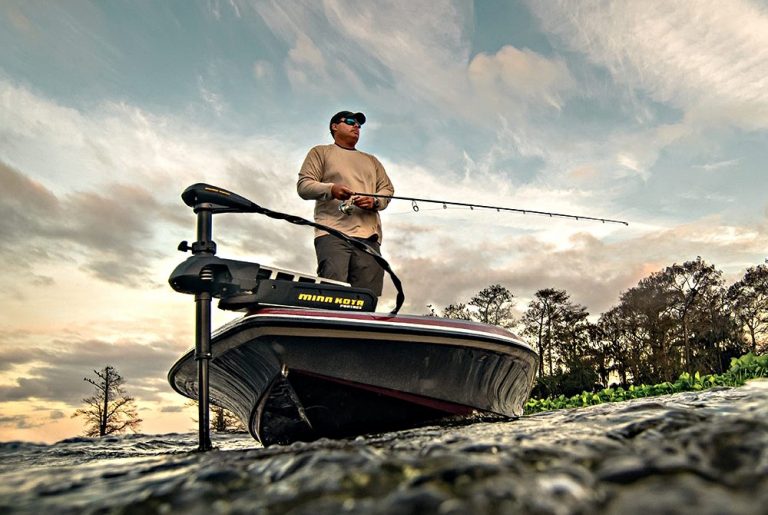
Vous avez trouvé votre coin. Le doré est le long de la bordure de végétation sur le lac Simcoe, l'achigan est blotti contre une pointe rocheuse sur le Kawartha, ou le brochet navigue dans les eaux peu profondes du lac Rice à l'aube. La dernière chose dont vous avez besoin est de vous battre avec votre moteur plutôt qu'avec votre poisson.
C'est pourquoi plus de pêcheurs ontariens font confiance à Minn-Kota qu'à toute autre marque de moteur de pêche à la traîne. Et c'est pourquoi nous avons la gamme complète ici chez Energy Powersports à Oakville. Ce guide couvre tout — du Endura à 200 $ pour un ponton en aluminium de 14 pieds au fleuron Ultrex QUEST pour un bateau de basse de compétition — afin que vous repartiez avec exactement le bon moteur pour votre bateau et votre plan d'eau.
1. Pourquoi Minn-Kota ?
Minn-Kota fabrique des moteurs de pêche à la traîne depuis 1934, lorsque O.G. Schmidt a inventé le premier moteur électrique de pêche à la traîne à engrenages à Fargo, dans le Dakota du Nord — nommant la société d'après la région frontalière du Minnesota et du Dakota du Nord où il pêchait. Plus de 90 ans plus tard, aucune autre marque ne se rapproche de Minn-Kota en termes d'innovation, de durabilité ou de soutien aux concessionnaires au Canada.
Principales raisons pour lesquelles les pêcheurs de l'Ontario choisissent Minn-Kota :
- Technologie Digital Maximizer — prolonge l'autonomie de la batterie jusqu'à 5 fois par rapport aux moteurs conventionnels en ne consommant que la puissance dont vous avez réellement besoin à une vitesse donnée.
- Ancre GPS Spot-Lock — maintient votre position exacte sans les mains grâce au GPS, afin que vous puissiez vous concentrer sur la pêche dans les conditions venteuses notoires de l'Ontario.
- One-Boat Network (OBN) — connecte votre moteur de pêche à la traîne, votre détecteur de poissons Humminbird et votre application mobile en un seul système intégré contrôlable depuis n'importe où sur le bateau.
- Technologie sans balais QUEST — la nouvelle génération offre une autonomie 30 % plus longue et jusqu'à 50 % de couple en plus par rapport aux prédécesseurs à balais, conçue pour les eaux agitées.
- Réseau de concessionnaires canadiens — service de garantie et support de pièces auprès de concessionnaires agréés comme Energy Powersports, et non d'importations du marché gris.
2. Comment choisir le bon Minn-Kota
Avant d'examiner un modèle spécifique, répondez à quatre questions. Vos réponses réduiront le champ des possibles à deux ou trois options au maximum.
Question 1 : Quel est le poids total chargé de votre bateau ?
Incluez la coque du bateau, le moteur hors-bord, le carburant, les batteries, l'équipement et les passagers. C'est le chiffre le plus important — il détermine votre exigence de poussée minimale. Un bateau sous-motorisé sollicite constamment son moteur, consomme rapidement les batteries et s'use prématurément.
Question 2 : Montage avant ou montage arrière ?
Les moteurs à montage avant se fixent à l'avant du bateau et le tirent vers l'avant. Ils offrent un contrôle bien supérieur, surtout par vent, et sont le choix pour les bateaux de basse, les bateaux de doré en fibre de verre et tout bateau où un positionnement précis est important. La plupart des modèles GPS Minn-Kota sont à montage avant. Les moteurs à montage arrière se fixent à l'arrière, sont plus simples à installer et conviennent aux petits bateaux en aluminium, aux canoës et à la pêche occasionnelle où un contrôle avancé n'est pas nécessaire.
Question 3 : Voulez-vous des fonctionnalités GPS ?
La fonctionnalité d'ancrage GPS Spot-Lock change véritablement la donne sur les grands lacs de l'Ontario (Simcoe, Érié, Ontario, Nipissing) où le vent et le courant sont des variables constantes. Si vous avez déjà passé une demi-journée à vous repositionner au lieu de pêcher, le GPS se rentabilise rapidement. Si vous pêchez dans de petits étangs abrités ou des rivières avec un courant minimal, vous n'en aurez peut-être pas besoin.
Question 4 : Comment préférez-vous diriger ?
Minn-Kota propose trois styles de contrôle : la direction par câble (connexion directe entre la pédale et le moteur, privilégiée par les pêcheurs de tournois de basse pour la précision tactile), la direction électrique (la pédale envoie des signaux électroniques, fonctionnement plus souple, compatible avec le GPS et les télécommandes sans fil), et la poignée de barre franche (moteurs à montage arrière dirigés à la main).
En cas de doute sur la poussée, choisissez plus grand. Un moteur fonctionnant à 60 % de sa capacité durera plus longtemps qu'un autre fonctionnant à 90 %, et vous aurez des réserves pour les jours où le vent du sud du lac Simcoe souffle à 25 km/h contre vous.
3. Tableau de référence de la poussée et de la tension
La règle standard est simple : vous avez besoin d'au moins 2 livres de poussée par 100 livres de poids de bateau entièrement chargé. Pour la pêche en Ontario où le vent et le courant sont importants, ajoutez 10 à 20 % à ce minimum.
| Poids du bateau chargé | Poussée min. (lbs) | Poussée recommandée | Tension requise | Batteries nécessaires |
|---|---|---|---|---|
| Jusqu'à 1 000 lbs | 20 lbs | 30–40 lbs | 12V | 1 |
| 1 000–1 500 lbs | 30 lbs | 40–55 lbs | 12V | 1 |
| 1 500–2 000 lbs | 40 lbs | 55–70 lbs Le plus populaire | 12–24V | 1–2 |
| 2 000–2 500 lbs | 50 lbs | 70–80 lbs | 24V | 2 |
| 2 500–3 000 lbs | 60 lbs | 80–101 lbs | 24–36V | 2–3 |
| 3 000+ lbs | 80+ lbs | 101–115 lbs Équipement Pro | 36V | 3 |
Ce sont des valeurs de poussée minimales pour des conditions calmes. Les pêcheurs de l'Ontario qui pêchent dans des sections exposées du lac Simcoe, de la baie de Quinte ou de la rive nord du lac Érié devraient ajouter au moins un niveau de poussée au-dessus du minimum pour une performance fiable par vents de 15 à 25 km/h.
4. Choisir la bonne longueur d'arbre
Un arbre sous-dimensionné est l'une des erreurs les plus courantes et les plus coûteuses que commettent les acheteurs de moteurs de pêche à la traîne. Si l'hélice cavite hors de l'eau dans la moindre houle, vous perdez de la poussée au moment précis où vous en avez le plus besoin. Minn-Kota recommande que la section du moteur (zone de l'hélice) soit immergée d'au moins 12 pouces sous la ligne de flottaison en tout temps.
| Hauteur de la proue / Franc-bord | Longueur d'arbre recommandée | Type de bateau typique |
|---|---|---|
| Jusqu'à 12" | 36" | Petit aluminium, canoë, kayak |
| 12"–16" | 42" | Aluminium 14–16 pieds, ponton |
| 16"–22" | 52" | Fibre de verre 16–18 pieds, mod-V |
| 22"–28" | 60" | Bateau de basse 18–21 pieds, équipement de doré |
| 28"–36" | 72" | Deep-V 21–24 pieds, ponton |
| 36"+ | 87"–100" | Grand ponton, offshore |
En cas de doute entre deux longueurs d'arbre, choisissez toujours la plus longue. Un arbre trop long signifie simplement que l'hélice est un peu plus profonde — ce n'est pas un problème. Un arbre trop court signifie que l'hélice brise la surface dans une vague de 1 pied, et vous vous battrez avec votre moteur toute la journée.
5. Analyse des modèles : Chaque série Minn-Kota
La gamme de Minn-Kota va des simples moteurs de tableau arrière pour petits bateaux aux systèmes QUEST sans balais haute performance pour les pêcheurs de tournois sérieux. Voici toutes les séries à connaître.
- Plage de poussée : 30–55 lbs
- Tension : 12V
- Type de montage : Tableau arrière
- GPS / Spot-Lock : Non
- Garantie : 2 ans
PowerDrive
- Plage de poussée : 55–80 lbs
- Tension : 12–24V
- Type de montage : Avant
- GPS / Spot-Lock : Option i-Pilot
- Type de direction : Direction électrique
- Garantie : 2 ans
Terrova
- Plage de poussée : 55–115 lbs
- Tension : 12–36V
- Type de montage : Avant
- GPS / Spot-Lock : Oui, i-Pilot
- Sondeur : CHIRP double spectre
- Télécommande sans fil : Oui
Ulterra
- Plage de poussée : 60–112 lbs
- Tension : 24–36V
- Type de montage : Avant
- GPS / Spot-Lock : Oui, i-Pilot
- Rangement/Déploiement automatique : Oui, Power Trim
- Idéal pour : Pêcheurs solitaires, grands bateaux
Ultrex
- Plage de poussée : 80–112 lbs
- Tension : 24–36V
- Type de montage : Avant
- GPS / Spot-Lock : Oui, i-Pilot Link
- Type de direction : Câble + Électrique
- Sondeur : MEGA Imaging SI/DI
Terrova / Ultrex / Ulterra QUEST
- Plage de poussée : 90–115 lbs
- Tension : 24–36V (double)
- Type de moteur : Sans balais
- Autonomie vs génération précédente : +30 %
- Couple vs génération précédente : +50 %
- Matériau de l'arbre : Infusé de fibre de carbone
6. Comparaison des modèles en un coup d'œil
| Modèle | Montage | GPS | Sans fil | Rangement auto | Sans balais | Meilleure utilisation |
|---|---|---|---|---|---|---|
| Endura C2 / Max | Tableau arrière | — | — | — | — | Petits bateaux, occasionnel |
| PowerDrive | Proue | Optionnel | Optionnel | — | — | Taille moyenne, valeur |
| Terrova | Proue | ✓ | ✓ | — | — | Le meilleur polyvalent |
| Ulterra | Proue | ✓ | ✓ | ✓ | — | Solo / ponton |
| Ultrex | Proue | ✓ | ✓ | — | — | Basse / tournoi |
| Série QUEST | Proue | ✓ | ✓ | Selon modèle | ✓ | Eau agitée, performance max. |
7. Minn-Kota sur les eaux de l'Ontario
L'Ontario est l'une des destinations de pêche en eau douce les plus riches du monde, mais il exige un moteur capable de gérer des conditions variables. Voici comment Minn-Kota se comporte sur les eaux où la plupart de nos clients de la région d'Oakville pêchent :
Lac Simcoe et Lac Scugog
Grand, peu profond et exposé aux vents du nord et du sud qui peuvent créer un clapotis en moins d'une heure. Le Terrova avec Spot-Lock est le choix le plus populaire ici – les pêcheurs de doré jaune le long des herbiers au nord de Barrie apprécient particulièrement la fonction d'ancrage GPS qui maintient la position pendant qu'ils travaillent un jig.
Lacs Kawartha (Sturgeon, Pigeon, Katchewanooka)
Plus abrité mais avec une structure de végétation complexe et beaucoup de manœuvres en eau peu profonde. Le système de direction par câble Ultrex est préféré par les pêcheurs de bar travaillant les Kawarthas – un contrôle précis au pied autour des quais et des structures, avec Spot-Lock pour les moments où vous avez trouvé exactement la bonne trajectoire de lancer.
Lac Érié (Port Dover à Fort Érié)
L'Érié est dans une catégorie différente. Grandes eaux, houle imprévisible et pêche au doré qui se déroule souvent par temps moins qu'idéal. C'est là que la série QUEST justifie son prix premium – le couple supplémentaire et l'autonomie du moteur brushless sont importants lorsque vous luttez contre des vents de face de 25 km/h pour retourner à la rampe.
Baie Georgienne et Muskoka
Clair, rocheux, froid. Les achigans à petite bouche et les brochets trophées exigent un contrôle précis et silencieux du bateau. Le Terrova et l'Ulterra sont tous deux bien adaptés ici – la fonction Auto Stow/Deploy de l'Ulterra est particulièrement utile lorsque vous naviguez dans des hauts-fonds rocheux et que vous devez rapidement relever le moteur.
Prêt à trouver votre moteur ?
Découvrez notre gamme complète de moteurs Minn-Kota chez Energy Powersports, concessionnaire agréé à Oakville pour BRP, Sea-Doo, et maintenant les moteurs de pêche à la traîne Minn-Kota. Options de financement disponibles.

Laisser un commentaire
Ce site est protégé par hCaptcha, et la Politique de confidentialité et les Conditions de service de hCaptcha s’appliquent.